Protecting a Heated Driveway with Nanoclad Concrete Shield: Why It Matters
Protecting a Heated Driveway with Nanoclad Concrete Shield: Why It Matters
A heated driveway is a major upgrade for any Ontario homeowner. It helps reduce snow buildup, limits ice formation, and makes winter driveway maintenance much easier.
But while heated driveways are built for convenience, the concrete surface still needs protection.
In Barrie, Simcoe County, and the Georgian Bay region, driveways face a tough combination of snow, ice, moisture, freeze-thaw cycles, road salt, vehicle traffic, and oil or fluid leaks. A heated driveway helps melt snow and ice, but that can also mean more water moving across and into the concrete surface throughout the winter season.
That is where Georgian Roof Revive and Nanoclad Concrete Shield can help.
Nanoclad Concrete Shield is designed to protect concrete from moisture absorption, salt damage, staining, and everyday wear — making it an ideal treatment for heated driveways.
Why Heated Driveways Still Need Protection
Many homeowners assume that because a driveway is heated, it is automatically protected from winter damage. But the heating system and the concrete surface are two different things.
The heating system helps melt snow and ice. The concrete still has to deal with the water, salt, grime, and temperature changes left behind.
As snow melts, water can sit on the surface, move into small pores in the concrete, or carry road salt and contaminants deeper into the material. Over time, this can contribute to staining, surface wear, scaling, and premature deterioration.
A heated driveway may reduce ice buildup, but it does not stop concrete from absorbing moisture or contaminants.
The Hidden Risk: More Meltwater Means More Exposure
One of the biggest benefits of a heated driveway is that it melts snow quickly. But that also means the driveway may be exposed to more liquid water during winter conditions.
Instead of snow simply sitting on top, the heated surface creates meltwater that can move across the concrete repeatedly. If the concrete is unprotected, that water can soak into the surface.
When moisture gets into concrete, it can contribute to long-term problems, especially when combined with cold temperatures and salt exposure.
Nanoclad Concrete Shield helps reduce this risk by creating a hydrophobic barrier that repels water and helps prevent moisture from absorbing into the concrete.
Protection Against Salt and Winter Contaminants
Even if a homeowner does not use much salt directly on a heated driveway, vehicles often bring road salt onto the surface from streets, parking lots, and garages.
That salt can be hard on concrete.
Salt and de-icing chemicals can increase surface wear, contribute to staining, and accelerate deterioration when they are allowed to soak into unprotected concrete. For a heated driveway, where snow and ice are constantly melting, salt-laden water may move across the surface more often.
Nanoclad Concrete Shield helps protect against salt absorption by reducing how much water and contamination can penetrate the concrete.
That makes it especially valuable in Ontario winter conditions.
Oil and Stain Resistance for a Cleaner Driveway
Driveways deal with more than winter weather. They also face vehicle fluids, oil drips, grease, tire marks, dirt, and organic staining.
Nanoclad Concrete Shield provides oil-repelling protection that helps prevent oil and grime from soaking deep into the concrete. This makes spills and leaks easier to clean and helps preserve the appearance of the driveway over time.
For homeowners who have invested in a heated driveway, stain resistance is a major benefit. The driveway is already a premium feature — protecting its appearance helps protect that investment.
A Non-Slip, Natural-Looking Finish
Some traditional concrete sealers can leave a glossy film on the surface. In certain conditions, those coatings can become slippery when wet.
That is not ideal for a driveway, especially during winter.
Nanoclad Concrete Shield is designed to protect without creating a thick, slippery surface film. It maintains the natural appearance and texture of the concrete while adding invisible protection against moisture, salt, oil, and stains.
For heated driveways, that is important because the surface may regularly be wet from melting snow.
Why Heated Driveways Are a Perfect Fit for Nanoclad Concrete Shield
A heated driveway is already designed to make winter safer, cleaner, and more convenient. Nanoclad Concrete Shield helps support that investment by protecting the concrete itself.
The benefits include:
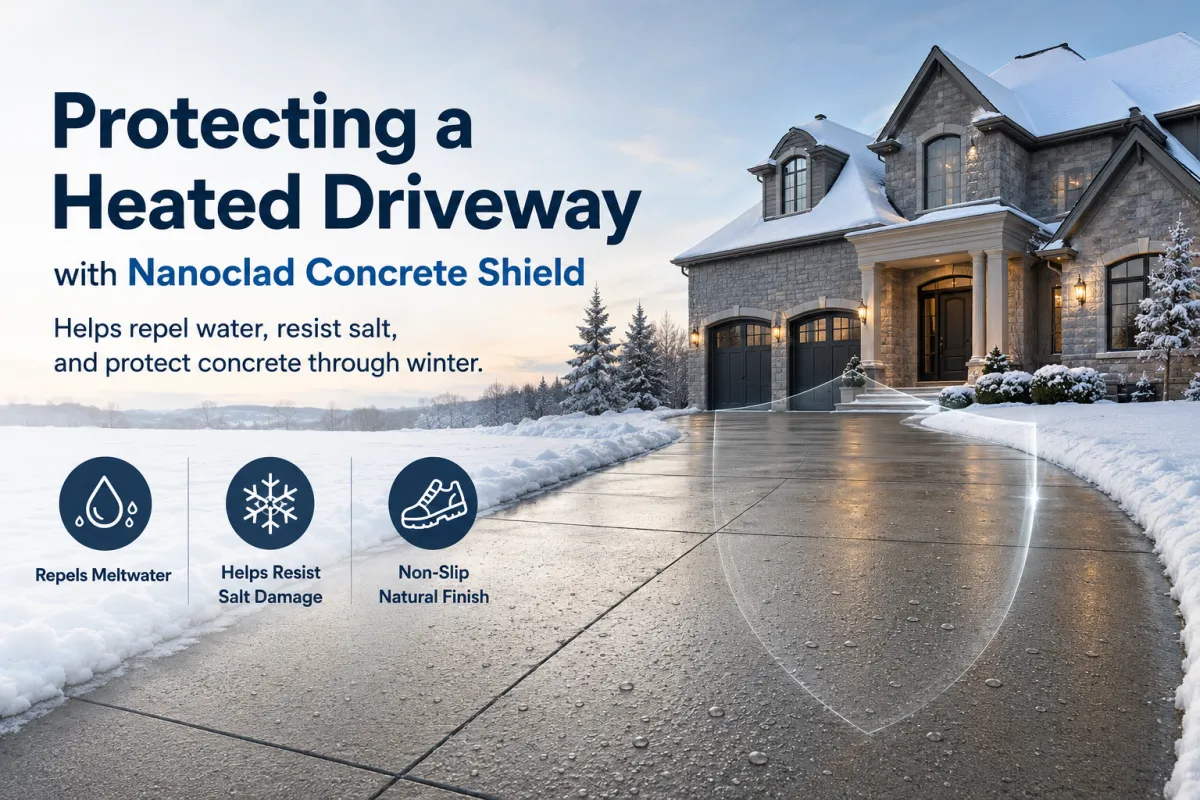
Helps repel meltwater from snow and ice
Reduces moisture absorption into the concrete
Helps protect against road salt and de-icing residue
Resists oil, grease, and vehicle fluid staining
Maintains a natural, non-slippery finish
Helps reduce surface wear and premature aging
Extends the life and appearance of the driveway
Supports long-term value for a premium concrete surface
For homeowners in Barrie and surrounding communities, this is a practical way to protect one of the most expensive exterior surfaces on the property.
Protecting the Investment You Already Made
Installing a heated driveway is not a small upgrade. It adds convenience, improves winter usability, and can enhance the overall value and appeal of a property.
But like any premium surface, it should be protected.
Without proper protection, even a heated driveway can become stained, worn, discoloured, or damaged over time. Moisture, salt, vehicle fluids, and repeated winter exposure can all take a toll.
Georgian Roof Revive applies Nanoclad Concrete Shield to help homeowners protect their heated driveways before visible damage becomes a bigger problem.
A Smarter Approach to Concrete Protection
Nanoclad Concrete Shield is not just for older or damaged concrete. In many cases, the best time to apply protection is while the driveway is still in good condition.
By treating the surface early, homeowners can help reduce the risk of staining, moisture absorption, salt damage, and premature deterioration.
For heated driveways, that proactive approach makes even more sense. The driveway is already built to manage winter conditions — Nanoclad Concrete Shield helps the concrete surface stand up to those conditions more effectively.
See If Your Heated Driveway Qualifies
If you have a heated driveway in Barrie, Simcoe County, or the Georgian Bay region, Georgian Roof Revive can help determine whether it is a good candidate for Nanoclad Concrete Shield.
Protect your concrete. Preserve your investment. Keep your driveway looking better for longer.
Book your free surface inspection today and find out whether your heated driveway qualifies for Nanoclad Concrete Shield protection.
Find out if Georgian RoofRevive can help protect your heated driveway - Book your free consultation now!